Review: Christmas Lantern with Angels SVG for Holiday Decor
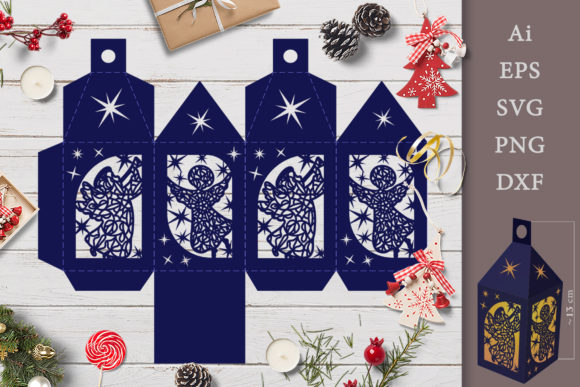
As a designer who spends more time staring at stitch maps than most people spend watching television, I approach every new digital embroidery file with a mix of excitement and skepticism. We've all been there: you download a beautiful preview image, only to find the actual embroidery project is a tangled mess of underlay issues or impossible density. Today, I'm taking a close look at the Christmas Lantern with Angels. SVG. Temp. While the product description highlights its potential as a 20 cm cut-out paper or cardstock lantern for festive interior decor, my job is to translate that visual concept into the world of thread and fabric. Can this 3D SVG aesthetic survive the transition from a digital cut file to a stitched handmade product? Let's dig in.
First Impressions: Mood and Visual Personality
The moment you open the file for Christmas Lantern with Angels. SVG. Temp, the mood is unmistakable. It captures that specific, quiet reverence of the holiday season. The silhouette of the lantern combined with angelic figures suggests warmth, light, and tradition. For a craft business owner, this visual personality is gold. It doesn't scream "cheap novelty"; it whispers "heirloom quality."
However, translating a design meant for a 20 cm physical lantern into embroidery requires a shift in thinking. In its original form, this is a 3D SVG intended for cutting and assembly. As an embroiderer, we are working in two dimensions but trying to create depth through thread. The layout is generally clean, which is a good sign. Complex, overlapping vectors that work for laser cutting can be a nightmare for needle penetration. My initial assessment is that the shapes are distinct enough to be rendered effectively with a combination of satin stitch for the outlines and fill stitch for the solid areas of the lantern body.
Real-World Application: From Digital File to Finished Product
Let's move beyond theory and talk about where this design actually shines. I recently had a client request a series of high-end custom apparel items for a boutique hotel's holiday gift shop. They wanted something that felt cozy but sophisticated. This is exactly where Christmas Lantern with Angels. SVG. Temp fits in.
Imagine this design centered on a heavy-weight cotton tote bag design or the chest of a cream-colored fleece sweatshirt embroidery project. The lantern motif acts as a focal point without being overwhelming. Because the original concept is a lantern, it naturally implies light. If you were to use metallic or variegated thread colors—perhaps a soft gold or a warm amber against a deep navy background—you could mimic the glow of a candle inside the lantern. This adds a layer of sophistication that elevates the finished product from a simple craft to a desirable small shop product.
For Etsy sellers looking to expand their holiday embroidery catalog, this design offers versatility. It works beautifully as a large back-piece on a denim jacket or as a detailed embroidered patch that can be sewn onto a pillow cover. The scale mentioned in the description (around 20 cm) is quite large for standard apparel, so resizing will likely be necessary. A 20 cm design is perfect for a pillow cover or a wall hanging, but for a baby embroidery project on a onesie or a cap, you would need to scale it down significantly. This brings us to the technical challenges.
Technical Considerations and Stitching Clarity
Here is where experience matters. When you take a vector designed for cutting and adapt it for stitching, you must respect the limitations of the machine and the fabric texture. The Christmas Lantern with Angels. SVG. Temp features details that need careful handling. Angels often have delicate wings or facial features. In a cut file, a thin line is just a thin line. In embroidery, a line that is too thin might break, disappear, or require such high stitch density that it causes puckering.
If you are planning to use this on stretchy fabrics like jersey knits for custom apparel, you must be vigilant. The dense areas of the lantern structure could cause the fabric to pucker if the stabilizer isn't up to the task. I strongly recommend using a cut-away stabilizer for this design, especially if the finished product is intended to be washed frequently, like a kitchen towel or a child's shirt. A tear-away might leave behind bits of paper in the dense fill stitches, ruining the professional look.
Furthermore, consider the hoop size. If you intend to keep the design near its original 20 cm scale, you will need a large hoop, possibly a jumbo hoop depending on your machine. Trying to force a design this size into a standard 4x4 hoop by shrinking it might result in the loss of those crucial angel details. Always check the minimum recommended size for any machine embroidery design before committing to a project. If the provider hasn't specified a minimum stitch count or size, run a test on scrap fabric first.
Navigating Fabric Choices and Color Contrast
The success of this design heavily relies on contrast. A lantern is defined by the light within it. If you stitch this design onto a dark fabric using dark threads, the definition will be lost. To maintain the integrity of the applique design feel (even if not using actual applique), ensure there is a stark contrast between the lantern outline and the background.
For commercial embroidery projects, consistency is key. If you are producing a run of fifty tote bags, test your thread colors under different lighting conditions. What looks like a festive red in the studio might look brownish under warehouse lighting. Also, be cautious with textured fabrics like terry cloth or thick wool. The intricate parts of the angel figures might get lost in the pile of the fabric. In such cases, simplifying the design or increasing the stitch length slightly can help the image pop.
Designer Notes for Commercial Viability
Before you list this as a printable mockup or start stitching items for your craft business, there are a few housekeeping items to address. First, verify the licensing. Just because you downloaded an SVG template doesn't automatically grant you the right to sell the digitized embroidery version or the physical goods made from it. Confirm whether the license covers commercial embroidery use.
Second, digitization matters. If this file is strictly a vector for cutting (SVG for Cricut/Silhouette) and not a pre-digitized embroidery file (PES, DST, EXP), you cannot simply load it into your machine. You will need to digitize it yourself or hire a professional digitizer to convert the 3D SVG paths into stitch commands. This process involves defining stitch types, directions, and underlay. A poor digitization job can ruin even the best design. Look for smooth curves in the lantern arches and ensure the text (if any is included in the temp file) is converted to running stitches or small satin columns that remain legible.
Finally, think about the customer experience. A buyer purchasing a personalized gift featuring this design expects durability and clarity. Inspect the back of your stitches. Are there excessive jumps? Is the backing neat? These hidden details determine whether a customer returns to your small shop product line or moves on to a competitor.
Final Verdict
The Christmas Lantern with Angels. SVG. Temp is a charming asset with significant potential for the right creator. It embodies the spirit of Christmas without relying on clichés. However, it demands respect for the medium. It is not a "load and go" solution for every fabric type. It requires thoughtful resizing, appropriate stabilizer selection, and a keen eye for color contrast.
For the creative entrepreneur willing to put in the prep work—testing on scraps, adjusting density, and selecting premium materials—this design can become a standout piece in a holiday collection. Whether it ends up on a luxury tote bag, a cozy blanket, or a decorative wall hanging, the result can be a handmade product that brings genuine joy. Just remember: the magic isn't just in the download; it's in the execution.